
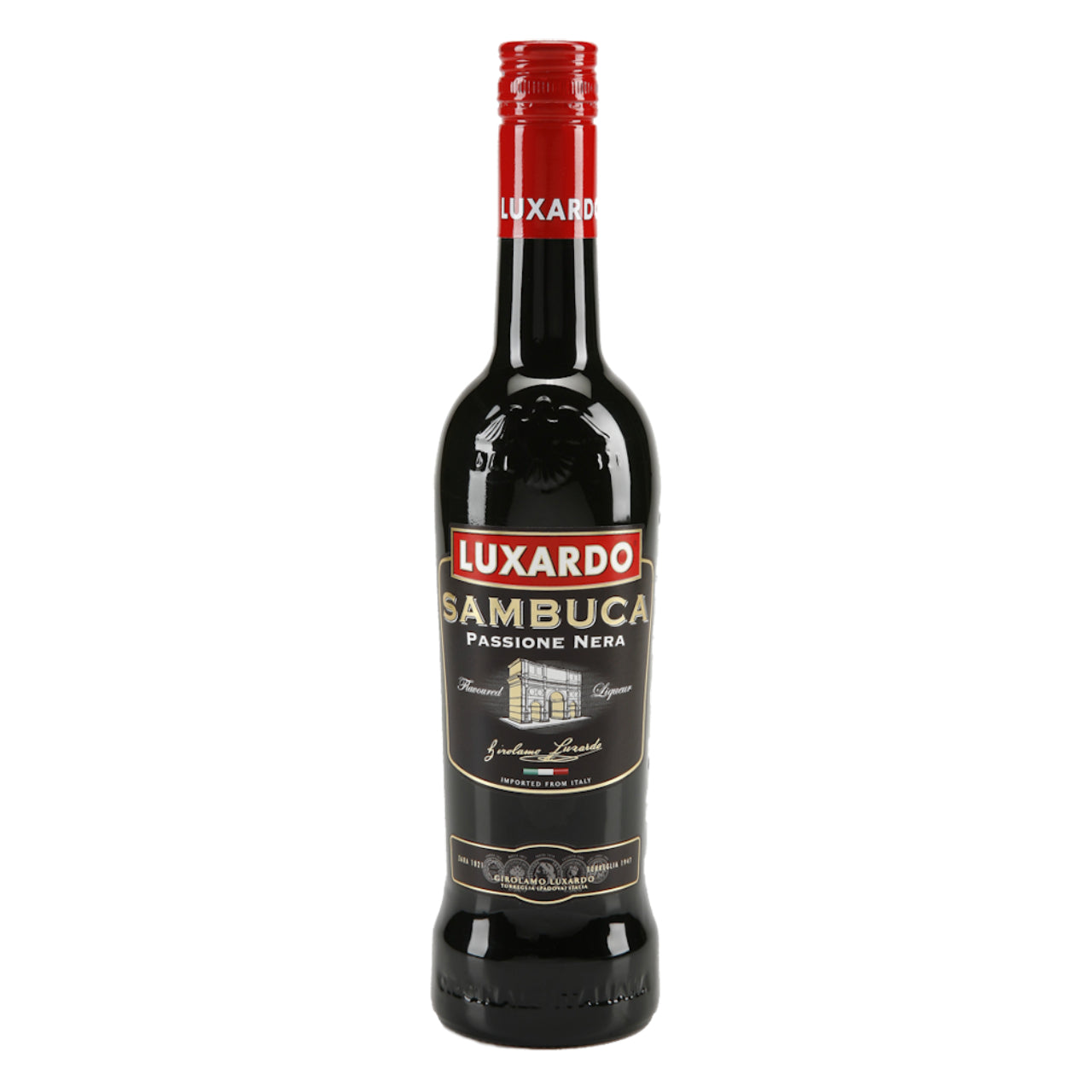
LUXARDO- Sambuca Passione Nera
About Sambuca
Sambuca is an Italian liqueur flavoured with anise, and European spirit drink law is specific about it: the flavour has to come from anethole taken from star anise, green anise or fennel, it must be sweetened, and it has to be bottled at a minimum of thirty eight per cent.
That last number surprises people. Sambuca tastes sweet and reads soft, but it is as strong as most whisky, and the sugar hides it completely. It is the main thing worth knowing before you pour one.
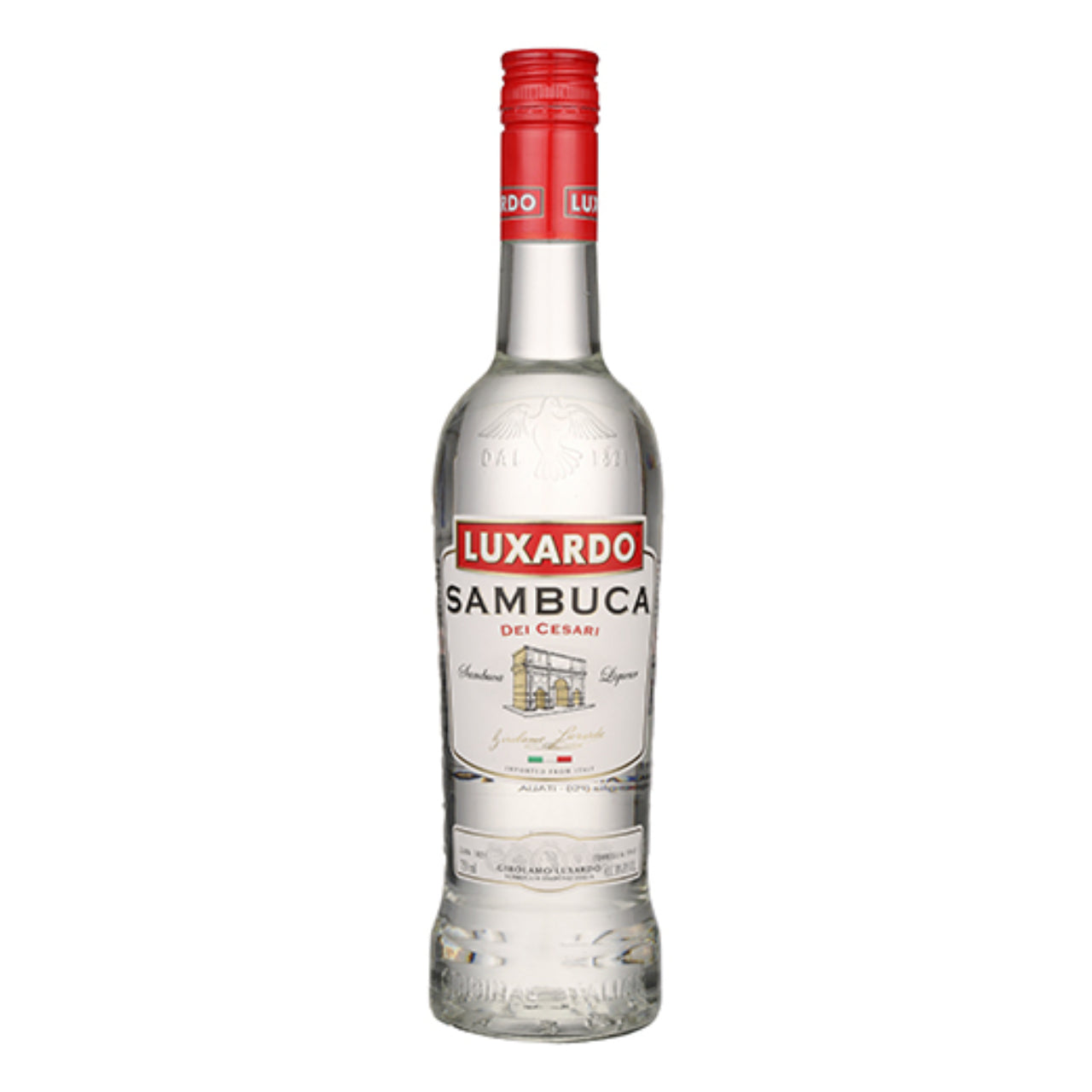
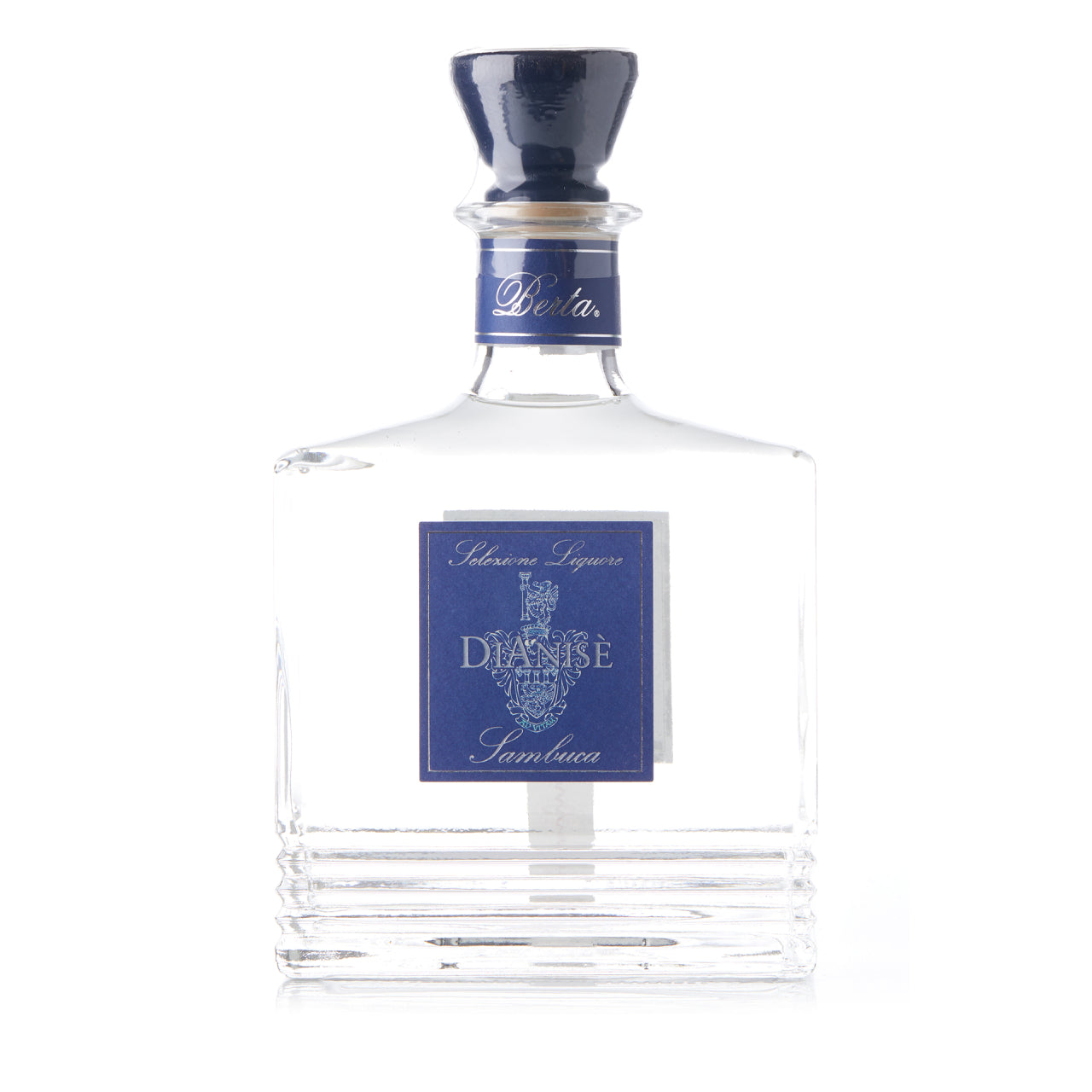
The page here is short and honest about it. Luxardo supplies both of the clear choices: the Sambuca Bianca, which is the standard colourless style, and Passione Nera, the black version, which takes its colour and a darker, more liquorice driven flavour from additional botanicals rather than from being a different spirit. Berta, a Piedmont distiller better known for grappa, makes the third bottling.
Luxardo works at Torreglia in the Veneto and is one of the older Italian liqueur houses still in family hands, which is also where the maraschino cherries on the fruits in spirits page come from.
If you want the broader anise family, pastis and absinthe sit elsewhere on the site, and they are drier and quite different drinks despite the shared botanical.
History
Anise flavoured drinks run right along the Mediterranean, and sambuca belongs to a family that includes ouzo in Greece, raki in Turkey, arak in the Levant and pastis in France. The shared ingredient is anethole, the compound that gives all of them their liquorice character and the cloudiness they take on with water.
Sambuca as a named Italian product is more recent than the family it belongs to. The commonly told account places its commercial origin in Civitavecchia, on the coast north of Rome, in the second half of the nineteenth century, and the name is usually linked either to the sambucus elder or to the Arabic zammut, an anise drink brought through the port. Neither derivation is settled, and anyone who tells you it is certain is guessing.
What is documented is the twentieth century growth. Sambuca moved from a regional drink to a national one, and then to an export, and by the second half of the century it was a fixture of the Italian restaurant trade abroad. The ritual of the three coffee beans, con la mosca, with the fly, travelled with it.
Italian and then European law eventually fixed the definition, setting the minimum strength and requiring the anise flavour to be real rather than imitation. That is why a bottle labelled sambuca is a narrower thing than a bottle labelled anise liqueur.
How to drink it
Small measures, and treat the strength seriously. At thirty eight per cent and above, sambuca is a spirit wearing a dessert's clothes.
Neat and at room temperature is the traditional after dinner serve, in a small glass. Con la mosca adds three coffee beans floating on the surface, and chewing one at the end cuts the sweetness. Do not set it alight. The practice is common and it does nothing for the drink except burn off the aromatics and risk a burn.
Cold changes it more than most liqueurs. Straight from the freezer it thickens and the sweetness recedes, which makes it far easier to drink slowly.
With water it turns cloudy, the same louche effect you get with pastis and absinthe, because the anethole comes out of solution. A measure in a glass of cold water is a long, low strength drink and a fair way to try it if neat is too much.
In coffee it is the classic caffe corretto, a small measure stirred into espresso.
In cocktails it works where you want sweetness and anise together: a small dash lifts a sour, and it substitutes for pastis in a Sazerac rinse, though it will bring sugar with it.