
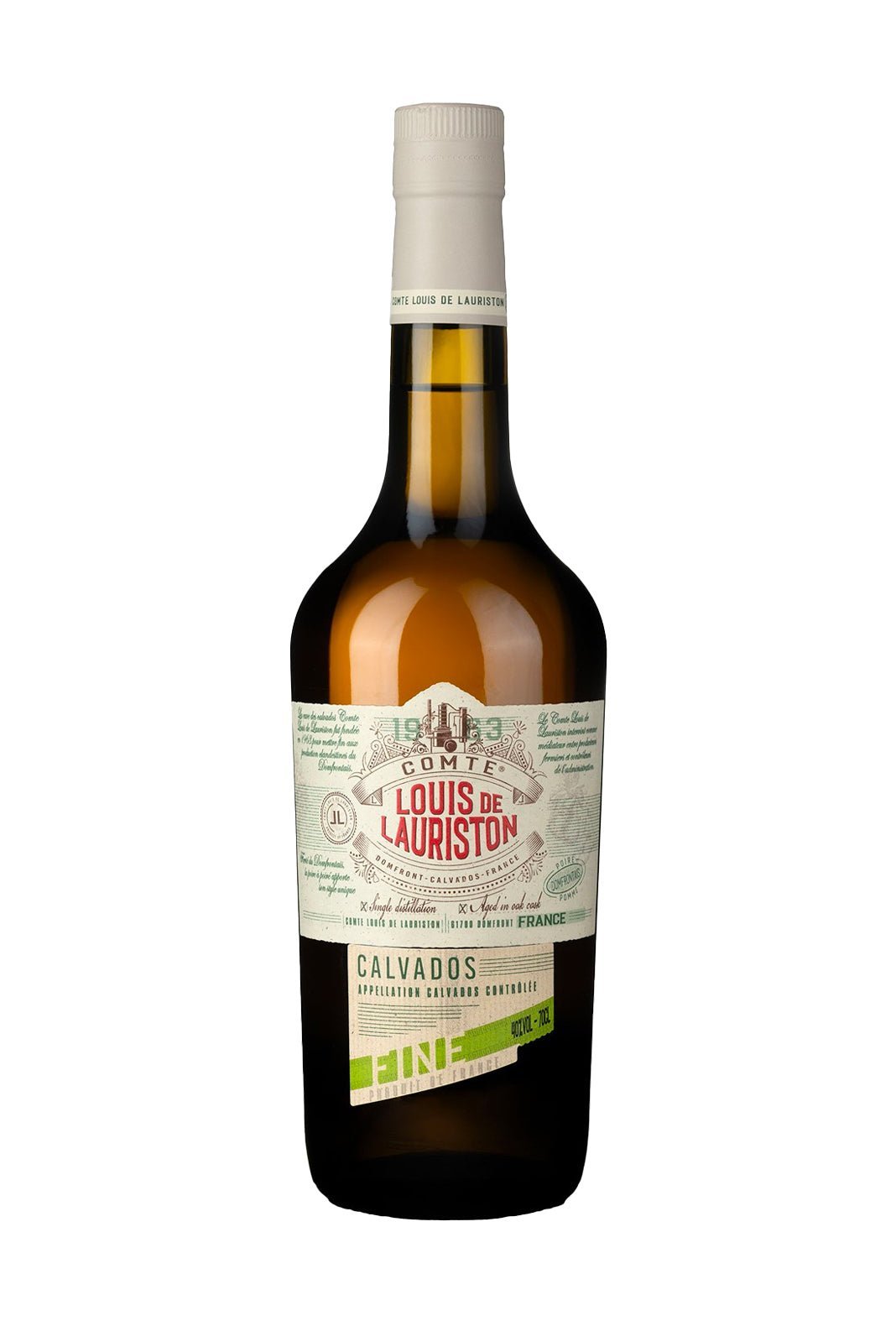
Comte Louis de Lauriston Calvados Domfrontais Fine 2 years 40% 700ml
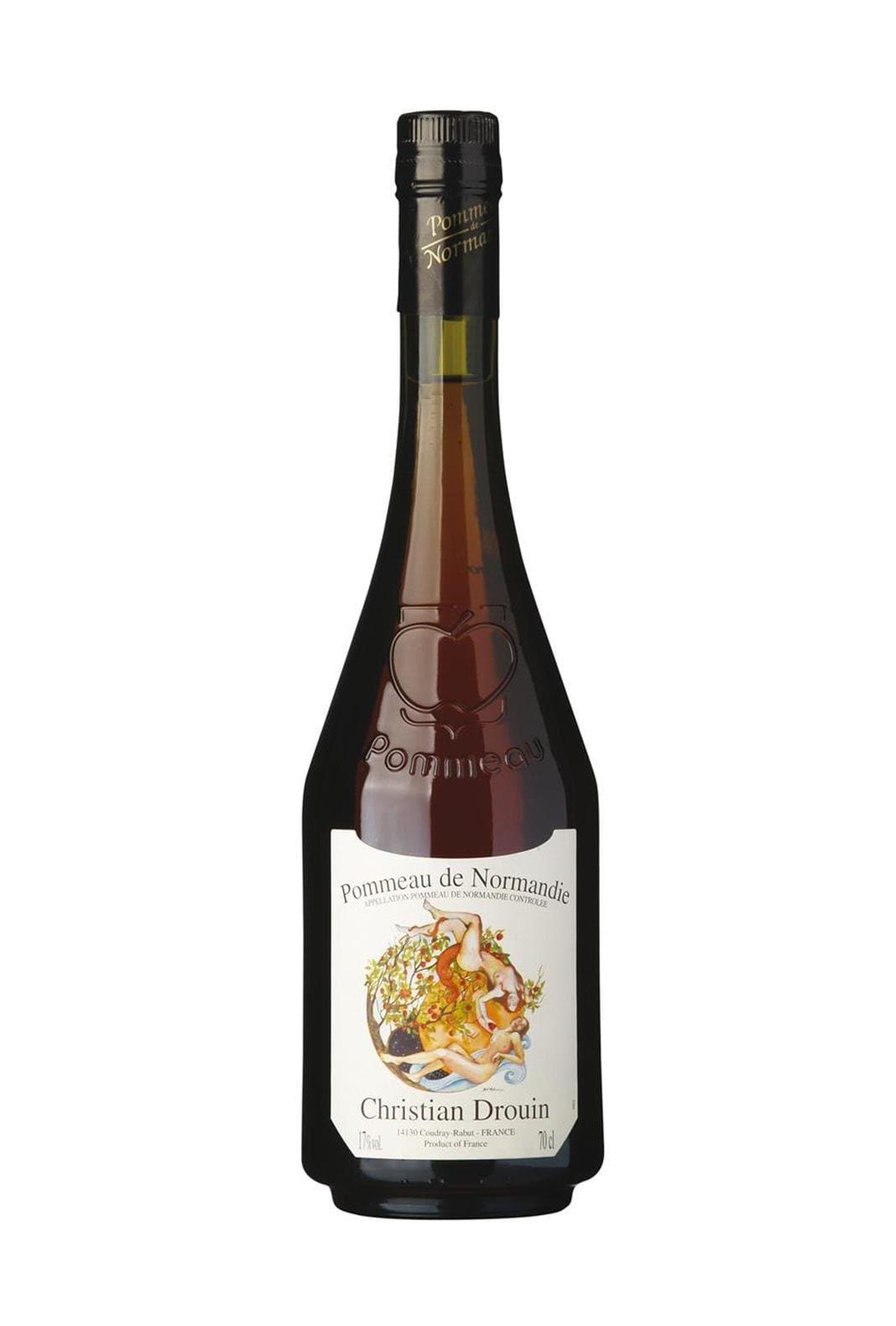
Lauriston Pommeau de Normandie Christian Drouin 17% 700ml
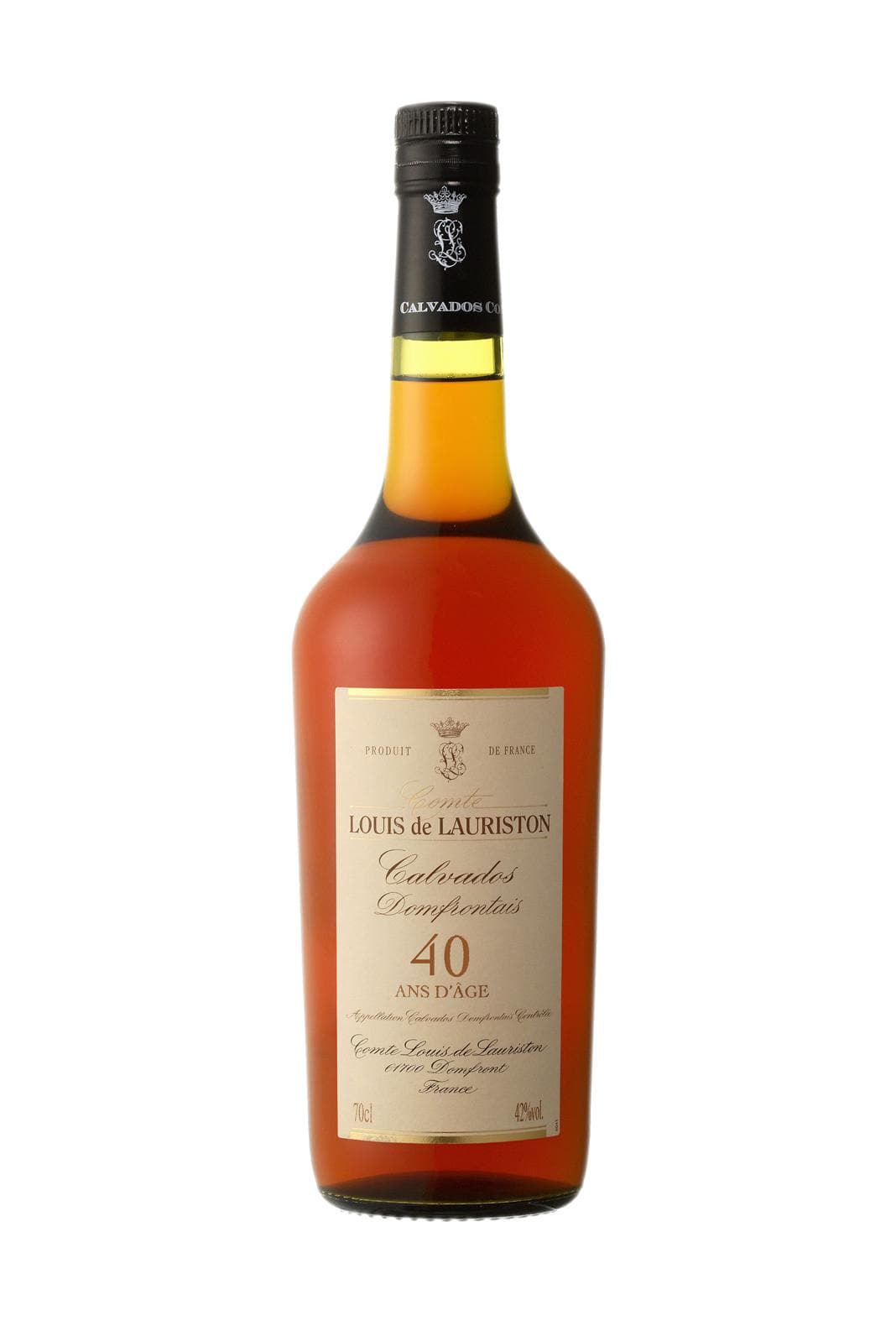
Comte Louis de Lauriston Calvados Domfrontais 40 years 42% 700ml
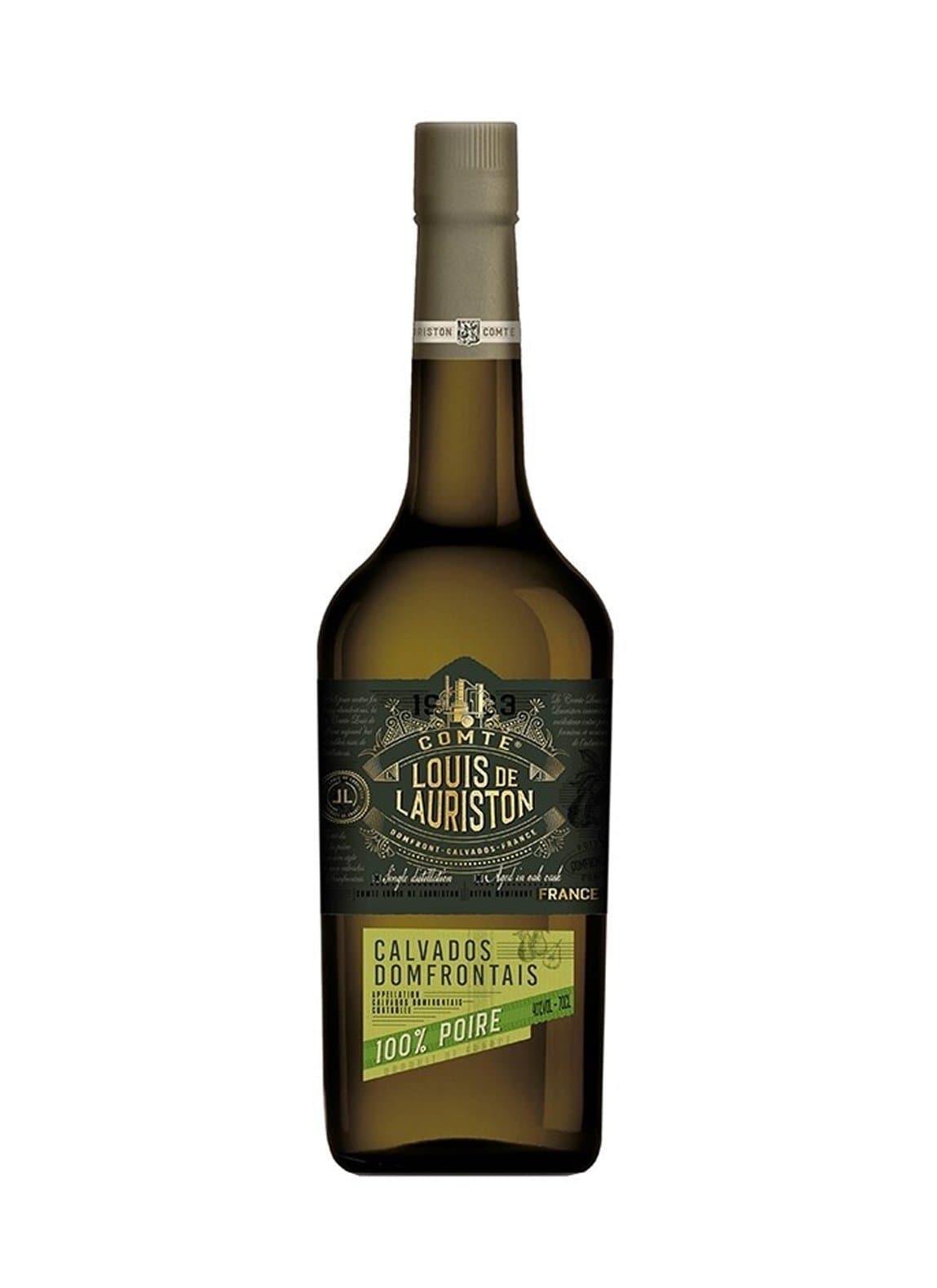
Comte Louis de Lauriston Calvados 5 year 100% Pear Domfrontais 40% 700ml
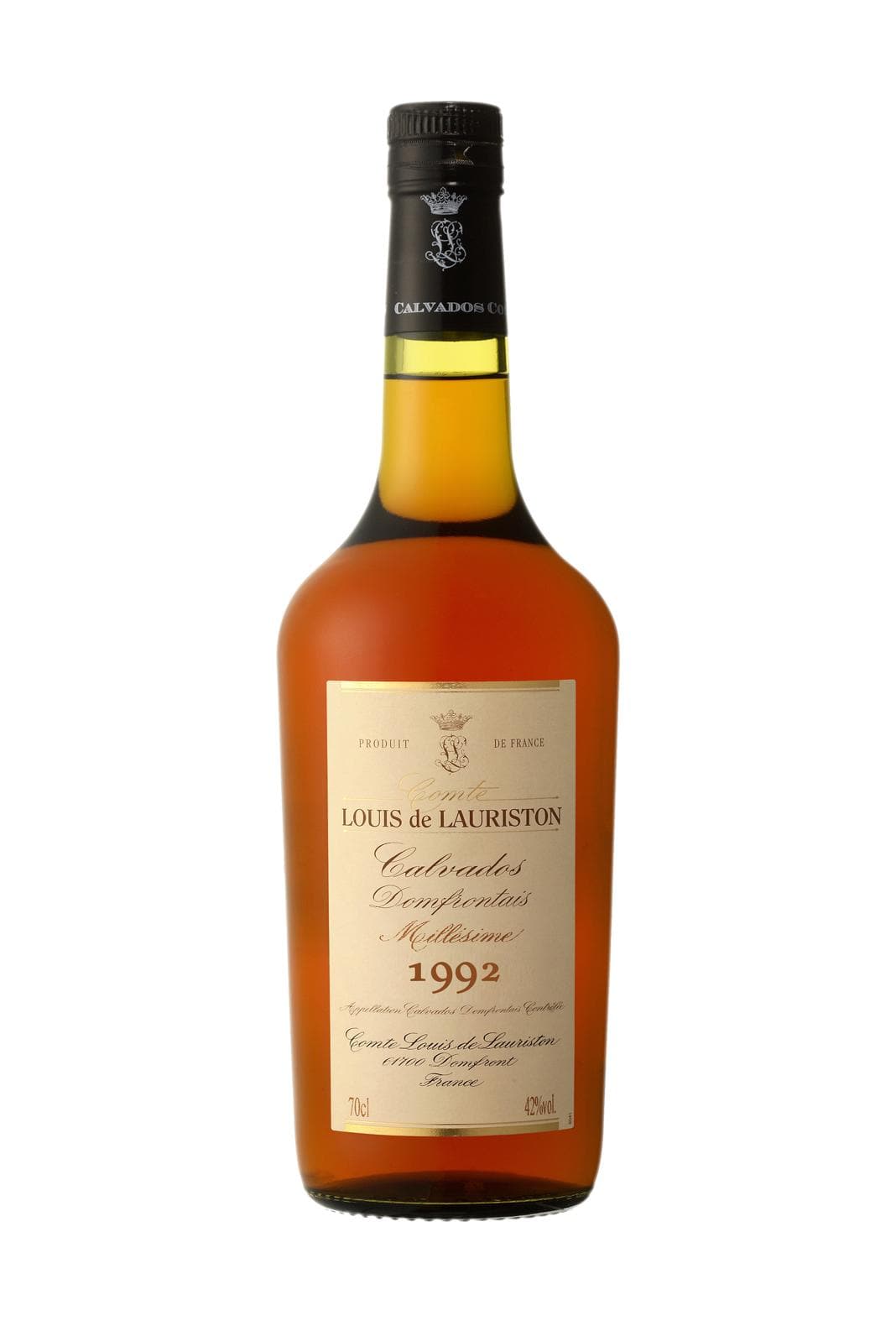
Comte Louis de Lauriston Calvados Domfrontais 1992 42% 700ml
About Comte Louis de Lauriston
Liquor Wine Cave lists the Comte Louis de Lauriston range in Australia: the Fine, the five year made entirely from pears, the 40 Year Old, a 1992 vintage and the Pommeau de Normandie.
Most people meet calvados as an apple spirit. Domfrontais is the exception. In the bocage around Domfront, on the southern edge of Normandy, tall standard pear trees have been part of the farm landscape for centuries, and the appellation created in 1997 requires a minimum of thirty percent perry pears in the cider before it is distilled. Lauriston works well above that floor. The result is lighter, more floral and more mineral than Pays d'Auge, with a sharpness that reads almost like a good poire eau de vie.
The Fine is the young, bright introduction and the one to cook and mix with. The five year made entirely from pears is the clearest statement of what the region does, and worth tasting beside any apple calvados to hear the difference. At the far end sits the 40 Year Old, along with a 1992 vintage.
The Pommeau de Normandie is a different animal. Comte Louis de Lauriston is a brand of Christian Drouin, who make it alongside their own Pays d'Auge range. See the full calvados selection, or the wider brandy range.
History
Domfront grows pears because the ground told it to. The soils on this granite and schist edge of Normandy are poorer and more acidic than the rich clay of the Pays d'Auge, and perry pears cope with them better than apples do. The trees are grown as tall standards rather than as modern dwarf orchards, and a mature pear tree can stand for well over a century. Nobody replants pears casually. An orchard planted now repays a grandchild.
The name belongs to a real person. Comte Louis de Lauriston was secretary general of the local farmers' federation, and in 1962 he brokered a settlement between excise officers and Domfront farmers who had been distilling without licence. The agreement created the Chais du Verger Normand, a cellar where growers could bring their spirit to be aged and sold legally.
In 1992 the operation joined Christian Drouin S.A., which has run the brand since. Guillaume Drouin took the chair in 2008.
Domfrontais was recognised as an appellation in 1997, with a minimum of thirty percent perry pears and a minimum of three years in oak. Where Pays d'Auge requires a pot still, Domfrontais uses a single continuous column, which lands lighter and more aromatic and suits pear fruit, which is delicate and easily buried. Pommeau is the region's mistelle, fresh juice arrested with calvados before it can ferment, then aged in oak, and it belongs with the wider family of mistelles and aperitifs.
How to drink it
Comte Louis de Lauriston is Domfrontais calvados, and it rewards a slightly cooler pour than a heavy apple calvados does. Around 16 to 18 degrees, in a tulip glass, keeps the pear florality intact. Warmer and it goes thin and spirity. Drink it neat without ice, because the fruit is too fine to survive dilution in the glass. In a built cocktail, where the other ingredients carry the drink, the young end works perfectly well.
At the table this is a cheese spirit above all. Pont l'Eveque, Livarot and blue cheeses all handle it, and so do pear or almond tarts, poached quince and plain shortbread. Because the style is lighter than Pays d'Auge it also works before a meal rather than only after, which is not true of most brandy.
The Pommeau is served cold, straight from the fridge in a small wine glass, and is the classic Normandy aperitif with melon, foie gras or a slice of terrine. It is roughly the strength of a fortified wine, so treat it like one, keep it in the fridge once open and finish it within two or three months, unlike the calvados beside it.
Start with the Fine to learn the shape of the style before spending on age. An opened bottle of the calvados keeps well for a year or two stored upright and out of the light.
More from this origin and style: