
Ask most Australians what sherry tastes like and the answer comes back sweet. It is a persistent misunderstanding, and it costs people some of the best bottles on the shelf. There are five classic styles across the two Jerez denominations, and every one is dry. The specification says so: no more than four grams of residual sugar a litre, most carrying less than one, and up to nine only in the age certified wines where long ageing has concentrated what little is there.
The sweetness people remember comes from two much smaller corners: naturally sweet wines pressed from sun dried grapes, and the blended cream styles built for export. Both are genuine sherry. Neither is the default.
What sherry actually is
Sherry is a white wine from a small corner of Andalusia in southern Spain, usually fortified though no longer always. The Consejo Regulador administers its denominación de origen, Jerez-Xérès-Sherry, and the delimited zone sits in the province of Cádiz. It was long a triangle of three towns, Jerez de la Frontera, El Puerto de Santa María and Sanlúcar de Barrameda; the 2022 revision widened it to ten municipalities, and the wine may be aged in any of them. Jerez is the Spanish name for both the town and the wine, so jerez wine and sherry are the same thing. The dry styles are built on Palomino, a fairly neutral grape on its own.
Under the Agreement between Australia and the European Community on Trade in Wine, in effect since 1 September 2010, Australia gave up the term sherry for its own wines. Australian fortified wine in these styles is now labelled apera, a Wine Australia certification trade mark.
Flor, and the fork in the road
After fermentation the bodega sets the strength, cask by cask, at either 15 per cent or 17 per cent. That one number decides whether a veil of yeast lives on the wine or dies on it.
At 15 per cent a veil of living yeast, the velo de flor, forms across the surface and stays there. This is biological ageing. The flor seals the wine from the air, feeds on its alcohol, glycerine and volatile acidity, and leaves acetaldehyde behind. The wine stays pale and lean, with the bready, saline, almond skin character fino drinkers are after.
At 17 per cent the veil cannot survive. Whatever flor there was dies away, and the wine spends the rest of its life in contact with air, for years and sometimes decades. This is oxidative ageing. It darkens, concentrates as water passes out through the cask walls, and turns nutty and heavy. It also stays completely dry. The specification defines oloroso and palo cortado as oxidative wines made after the initial veil of flor has gone, not as wines that never carried one. Every style below is a variation on those two paths.
Solera y criaderas
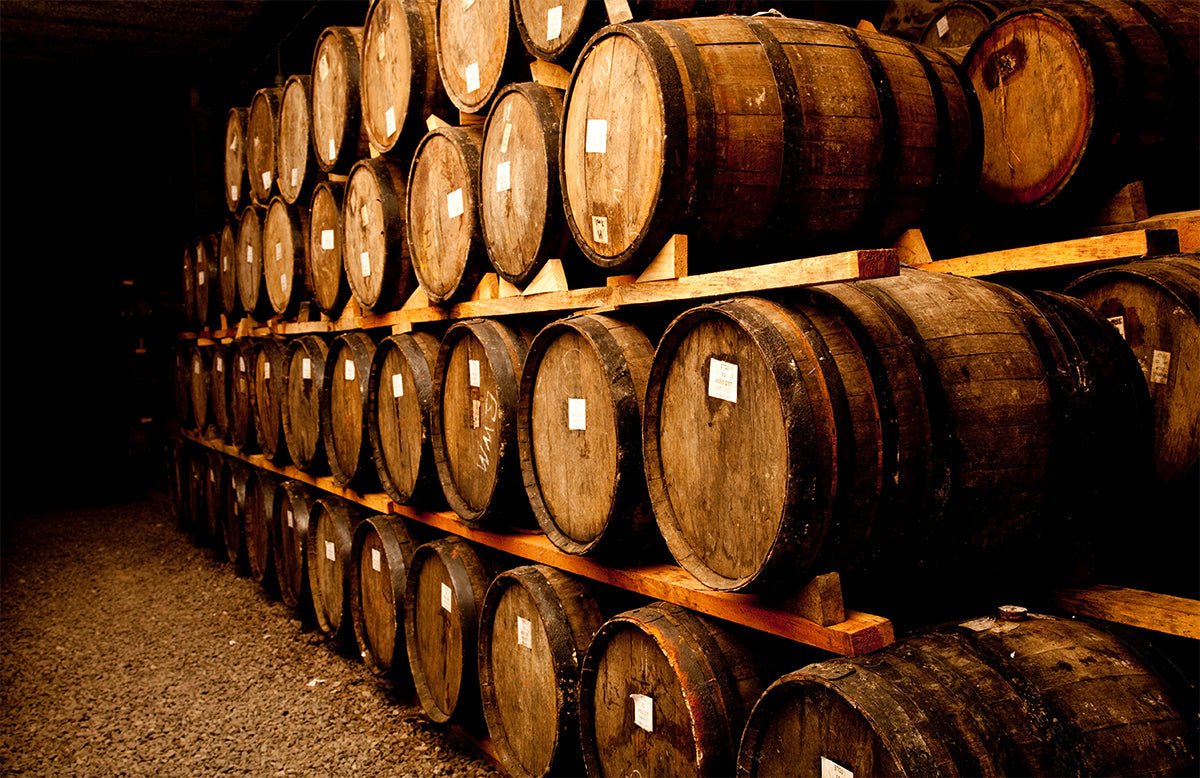
Sherry is not vintage wine, and the system that ages it is not ordinary blending. Casks sit in rows by age. Wine is drawn off the oldest row, the solera, which is topped up from the first criadera above it, and that from the second, and so on up the scale. The drawing off is the saca, the topping up the rocío. No row is ever emptied, so every bottle holds a fraction of much older wine, and the refreshing keeps the flor alive.
No more than half the volume may be drawn in a year, which guarantees the minimum two years of ageing. Age can be certified too: an average of 12 or 15 years for oxidatively aged wines, VOS over 20 and VORS over 30.
The styles, driest to sweetest
Fino is the pale one, and it is bone dry. Brought to 15 per cent, aged under flor for at least two years anywhere in the zone except Sanlúcar de Barrameda, and bottled between 14 and 17 per cent, usually at 15. Expect green olive, raw almond, chalk and a salty finish, with no fruit sweetness. Don Zoilo Sherry Aperitif Fino at 15 per cent is a straightforward way in, and Fernando de Castilla Fino is the Classic range equivalent.
Manzanilla is worth knowing even though we do not stock it. Same grape, same flor, same method, but it is aged in Sanlúcar de Barrameda and holds its own denominación. Lighter and saltier again, and nothing substitutes for it.
Amontillado has lived two lives. It begins as a fino under flor, then the flor goes and the wine finishes oxidatively, so you get both signatures: the saline cut of flor under the amber and hazelnut of oxidation. Dry, and bottled from 16 to 22 per cent. Don Zoilo Sherry Aperitif Amontillado at 19 per cent carries a 15 year statement, and Fernando de Castilla Amontillado is the same idea from the Classic range.
Palo cortado is the style people argue about, so here is only what is agreed. The base wine is set at 15 per cent and its cask marked with a palo, a slash. If a taster later finds particular characteristics there, a line is drawn across the slash, the wine goes above 17 per cent and finishes oxidatively. The Consejo describes the result as the bouquet of an amontillado with the body and palate of an oloroso, and the wines run from 17 to 22 per cent. What is contested is how much is accident and how much intent: the romantic account has it appearing unbidden in a cask nobody planned, while in practice the classification is made by tasting. Don Zoilo Palo Cortado at 20 per cent, with a 15 year statement, is where to meet it. Dos Cortados at 21.5 per cent is older and more concentrated, and Roberto Amillo La Saca at 22 per cent is a Jerez limited edition.
Oloroso is the purely oxidative one. Taken to 17 per cent early, so that the initial veil of flor does not survive, it spends the whole of its ageing life in air and is the biggest of the dry styles: walnut, dried fig, leather, caramel, real weight. It catches people out because it smells sweet and is not. It runs from 17 to 22 per cent. Don Zoilo Oloroso at 19 per cent carries a 15 year statement.
Cream, medium and pale cream are made differently again: a dry generoso sweetened to a target sugar level, with sweet must or a naturally sweet wine. They are legitimate sherry, and they gave the category its sweet reputation in markets like ours. We are not carrying a Jerez cream at present, and if sweet sherry is what you came for, the style below is the undiluted version.
Pedro Ximénez is naturally sweet and nearly black. The grape of the same name is laid out in the sun to raisin, a process called asoleo, until the must is so sugary that fermentation barely starts and is stopped with wine alcohol. Oxidative ageing follows. The result carries more than 212 grams of sugar a litre, sits between 15 and 22 per cent, and tastes of dried fig and molasses. Don Zoilo Sherry Aperitif Pedro Ximenez at 18 per cent carries a 15 year statement and Don Guido Pedro Ximenez Solera Special, also 18 per cent, a 20 year one. Fernando de Castilla PX at 15 per cent is the Classic range version. Moscatel is the other named sweet style, and the rules allow a third, called Dulce, from any of the authorised varieties.
Montilla-Moriles, which is not sherry
Several bottles in our sherry collection are not sherry, and it is better to say so plainly. Alvear works in Montilla-Moriles, a separate denominación de origen inland from Jerez, in the province of Córdoba rather than Cádiz. The vocabulary is nearly identical, which is where the confusion starts: the denomination makes fino, amontillado, oloroso, palo cortado and Pedro Ximénez, ages them through criaderas y solera, and grows flor on its finos.
The grape is the real difference. Montilla-Moriles is built on Pedro Ximénez, which accounts for more than 95 per cent of the vines planted in Córdoba province and is the denomination's principal variety, where Jerez builds its dry styles on Palomino. Its fino also tends to reach the 15 per cent minimum without fortification, which its own rules note, though Jerez now permits the same, so that is a tendency rather than a dividing line. It is sherry's closest relative rather than sherry.
Alvear Fino is the dry, flor aged one, Alvear PX Conde de la Cortina the sweet sun dried one, and Alvear Vermouth comes from the same house, alongside the rest of our vermouth range.
How to serve it
Fino wants to be properly cold, between 6 and 8 degrees, easiest in an ice bucket holding ice and water. Use a wide rimmed catavinos or a white wine glass, not a thimble, and keep an open bottle in the fridge. Amontillado, palo cortado and oloroso are better lightly chilled than cold. Pedro Ximénez goes at 12 to 14 degrees, with dark chocolate, blue cheese or vanilla ice cream.
These wines run from 14 to 22 per cent, so small measures are the norm and the traditional glass is small for a reason. Fino and amontillado take olives, almonds, cured ham and shellfish, and fino is one of the few wines that copes with vinegar. Oloroso handles roast meat and hard cheese. All of them work as an aperitif.
Where to start
- Never had sherry: Don Zoilo Sherry Aperitif Fino at 15 per cent.
- Expecting sweet: Don Zoilo Oloroso at 19 per cent.
- Actually want sweet: Don Zoilo Sherry Aperitif Pedro Ximenez at 18 per cent.
- Halfway between: Don Zoilo Sherry Aperitif Amontillado at 19 per cent.
- Worth the detour: Don Zoilo Palo Cortado at 20 per cent.
- Older and richer: Dos Cortados at 21.5 per cent, or Don Guido Pedro Ximenez Solera Special at 18 per cent.
The full range sits on our Sherry page, and we deliver to every Australian state and the ACT.