
Blanco is the tequila with nowhere to hide. There is no barrel to soften it, so what you taste is the agave, the water and the decisions the distillery made. That is why two bottles labelled blanco can taste so different, and why the label carries more useful information than most people read.
Our tequila buying guide covers the categories from blanco to extra añejo. This guide stays on blanco only: what the Mexican standard says it is, what separates one blanco from another, and which bottle in our blanco tequila range demonstrates each point.
Blanco, plata, silver: one class, three names
The rules for tequila are set by a Mexican standard, NOM-006-SCFI-2012, and the standard names the Consejo Regulador del Tequila, the CRT, or another accredited body, as the verifier of compliance with it. The standard sorts tequila by sugar source into two categories, and by what happens after distillation into five classes: blanco or plata, joven or oro, reposado, añejo and extra añejo.
Blanco and plata are the same class under the standard. Silver is the export name the standard itself allows for the same class, in a clause that also permits Gold for joven: Familia Camarena calls the product Silver on its own site and the bottle we carry is labelled Blanco. The standard defines the class as a transparent product, not necessarily colourless, made with no abocante (more on that word below), with only dilution water added to bring it to bottling strength. It may be rested in oak for less than two months and still be called blanco, so the rule is "under two months", not "never touched wood".
Joven, sometimes labelled oro or gold, is a blanco blended with aged tequila, or a blanco that has had abocantes added. Cristalino, a word you now see on some labels, is not a class the 2012 standard defines at all.
100 per cent agave versus tequila: the first thing to check
This is the line that matters most. The standard's two categories are "Tequila 100% de agave" and plain "Tequila". For the plain category, the fermentable sugars may be topped up with sugars from sources other than agave, up to 49 per cent of the total. At least 51 per cent must come from blue agave; the trade calls this a mixto. The 100 per cent agave category is exactly what it sounds like: no sugars other than those from blue Weber agave grown inside the protected territory, and the standard adds that it must be bottled at the authorised producer's own plant inside that territory.
In a blanco there is no oak to cover the difference. If the label does not say 100 per cent agave, in one of the four permitted forms (100% de agave, 100% puro de agave, 100% agave or 100% puro agave), it is the plain category. Rooster Rojo Blanco at 38 per cent is the plainest example in the range: its producer describes it as made from 100 per cent blue Weber agave, sweet on entry with a peppery finish.
The additive question, from the rule rather than the marketing
The standard defines a procedure called abocado: softening the flavour of a tequila by adding one or more of four things, caramel colour, natural oak extract, glycerine and sugar based syrup. It caps their use at one per cent of the tequila's weight before bottling. Reposado, añejo and extra añejo are defined as products that may be abocado. Blanco is defined as a product made without abocante.
Two things follow. First, "additive free" is not a category in the standard and the standard does not certify it, so treat it as a producer's own description, not a guarantee. Second, the standard does allow permitted sweeteners, colours and flavourings in any class, including blanco, but only if they are declared on the label, with limits on sugar and dry extract. A blanco with no such declaration is, by the rule, agave distillate and dilution water, nothing else.
Don Fulano Fuerte 100 Proof Blanco at 50 per cent is the bottle in our range whose producer is most explicit about this. Don Fulano states that its tequila is made entirely from three ingredients, hand selected mature agave, proprietary yeast and natural spring volcanic water, in what it calls a low intervention process.
Highlands and lowlands: real, but not a rule
The protected territory covers 181 municipalities across five states: Jalisco, Michoacán, Guanajuato, Nayarit and Tamaulipas. Within Jalisco, the trade divides production between the highlands, Los Altos, around towns such as Arandas and Tepatitlán, and the valley around the town of Tequila itself, the lowlands or Valles.
The distinction is real: Familia Camarena describes the highlands around Arandas as high altitude with rich volcanic soil. What is a convention rather than a rule is the flavour shorthand that goes with it, highlands fruitier and more floral, lowlands earthier and more peppery. The standard says nothing about either, cooking and strength change a blanco at least as much as postcode does, and the only honest way to test the generalisation is to taste one of each.
For the highlands, Camarena Blanco is a straightforward example. Its producer, Familia Camarena, harvests its agave in the highlands surrounding Arandas, and publishes no strength for it. Calle 23 Blanco is listed as unaged highland agave. For the lowlands, Rooster Rojo is the one: its owner states that it is made at the base of the Volcán de Tequila, in the heart of the Tequila region.
Cooking and crushing
The standard requires the agave heads to be hydrolysed or cooked, and it defines hydrolysis broadly as a chemical, thermal or enzymatic process, or a combination, that breaks the plant's inulin down into fermentable sugar. It does not prescribe the equipment. Producers use masonry ovens, pressure autoclaves or a diffuser, and the choice shows in a blanco more clearly than in any aged class. Only trust a method the producer itself states.
Two of our bottles show the two common routes. Familia Camarena says it cooks its agave in conventional stone ovens alongside modern processes, so Camarena Blanco is the oven example. Don Fulano's producer describes agave steamed at low pressure, which is the pressure vessel route, and the same page describes open fermentation with part of the agave fibre left in the tank. Neither producer states a diffuser. The standard does not make a producer declare its method, which is why one that volunteers it is telling you something.
The still and the strength
The standard requires distillation and defines it, but it does not say what the still must be. Rooster Rojo's owner says its tequila is double distilled in stainless steel pot stills, then blended with water filtered through Mexican silver. Familia Camarena describes copper coiled pot stills and a column still. Don Fulano's producer describes most of its spirit coming from double distillation in copper alembics, with a smaller share from a double column copper still. Three different answers to the same question, and each is in the glass.
Strength is the widest variable. The standard sets a band of 35 to 55 per cent alcohol by volume for every class. In Australia the Food Standards Code sets a general floor of 37 per cent for spirits, with a specific tequila floor of 35, so a 38 per cent blanco such as Rooster Rojo is within both and simply sits below the 40 that most people expect.
Don Fulano Fuerte 100 Proof Blanco is also the bottle to understand strength with. Its producer calls it the original overproof, with tasting notes of cooked agave, raspberry, orange blossom, cinnamon, mint and black pepper. Our Don Fulano guide covers the Fonseca family and La Tequileña in more depth. At 50 rather than 40 per cent it is a different drink, not a stronger one.
The decanter
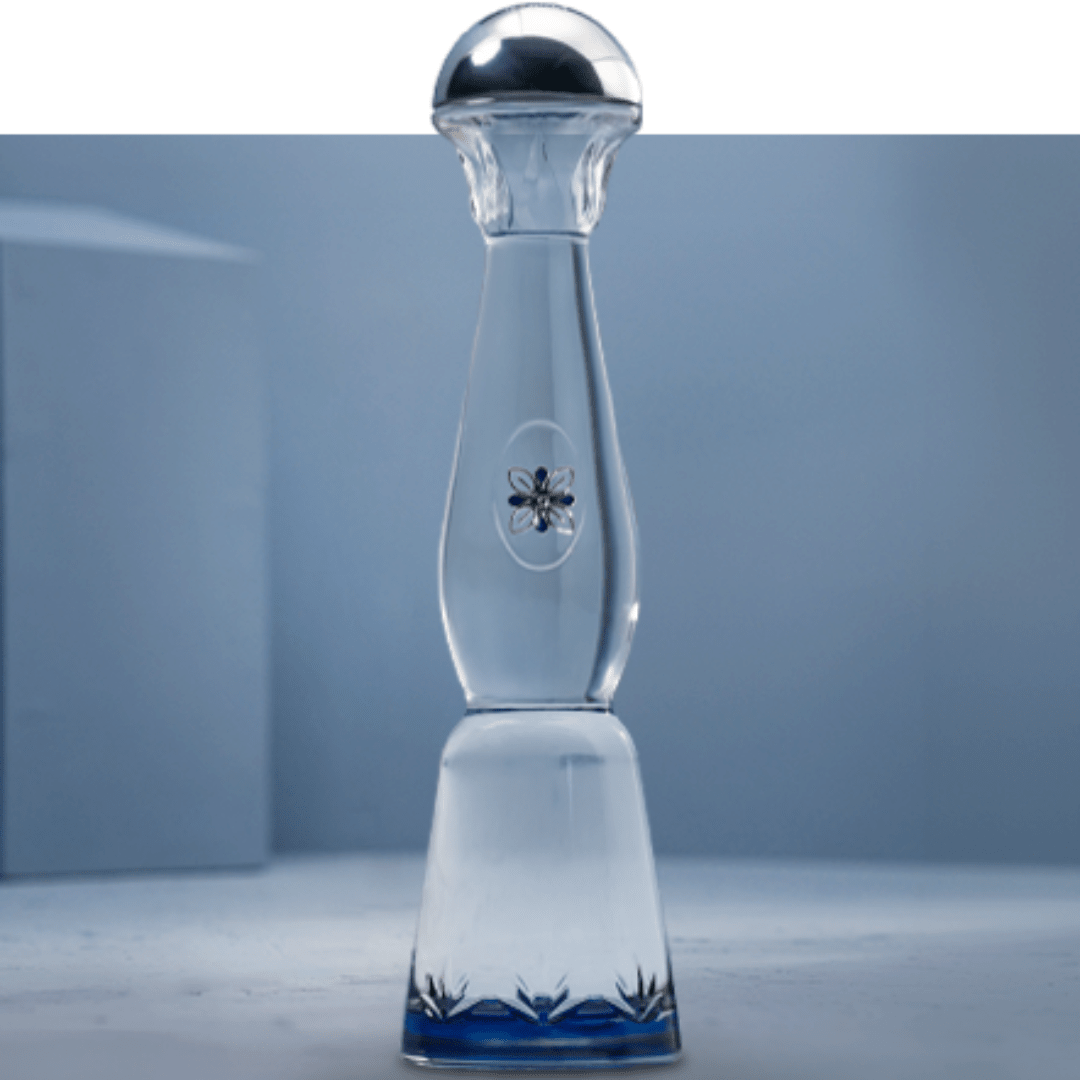
Clase Azul Tequila Plata at 40 per cent comes in the transparent version of the decanter the brand is known for. What is inside is governed by the same class definition as every other blanco here, and our Clase Azul guide explains what the house does differently.
How to drink it
Neat, at room temperature, in a small glass with room above the liquid. In Australia one standard drink is 30 ml of a 40 per cent spirit, so a nip of a 50 per cent blanco is more than one, and worth pouring accordingly.
In cocktails, blanco is the default tequila for a reason: a margarita, a paloma or a Tommy's margarita all want the clean agave line rather than oak. If smoke is what you are after, that is mezcal, and our mezcal versus tequila guide explains where the smoke comes from and why blanco tequila does not have it.
Where to start
- A classic 100 per cent agave blanco for mixing: Rooster Rojo Blanco, 38 per cent, from the valley floor.
- Highlands agave, stone ovens stated by the producer: Camarena Blanco, from around Arandas.
- Highlands agave, unaged, for cocktails: Calle 23 Blanco.
- Overproof, for sipping: Don Fulano Fuerte 100 Proof Blanco, 50 per cent.
- As a gift: Clase Azul Tequila Plata, 40 per cent, in the decanter.
The blanco range sits on our Blanco Tequila page, with Clase Azul and the aged classes on the main Tequila page, and we deliver to every Australian state and the ACT.