
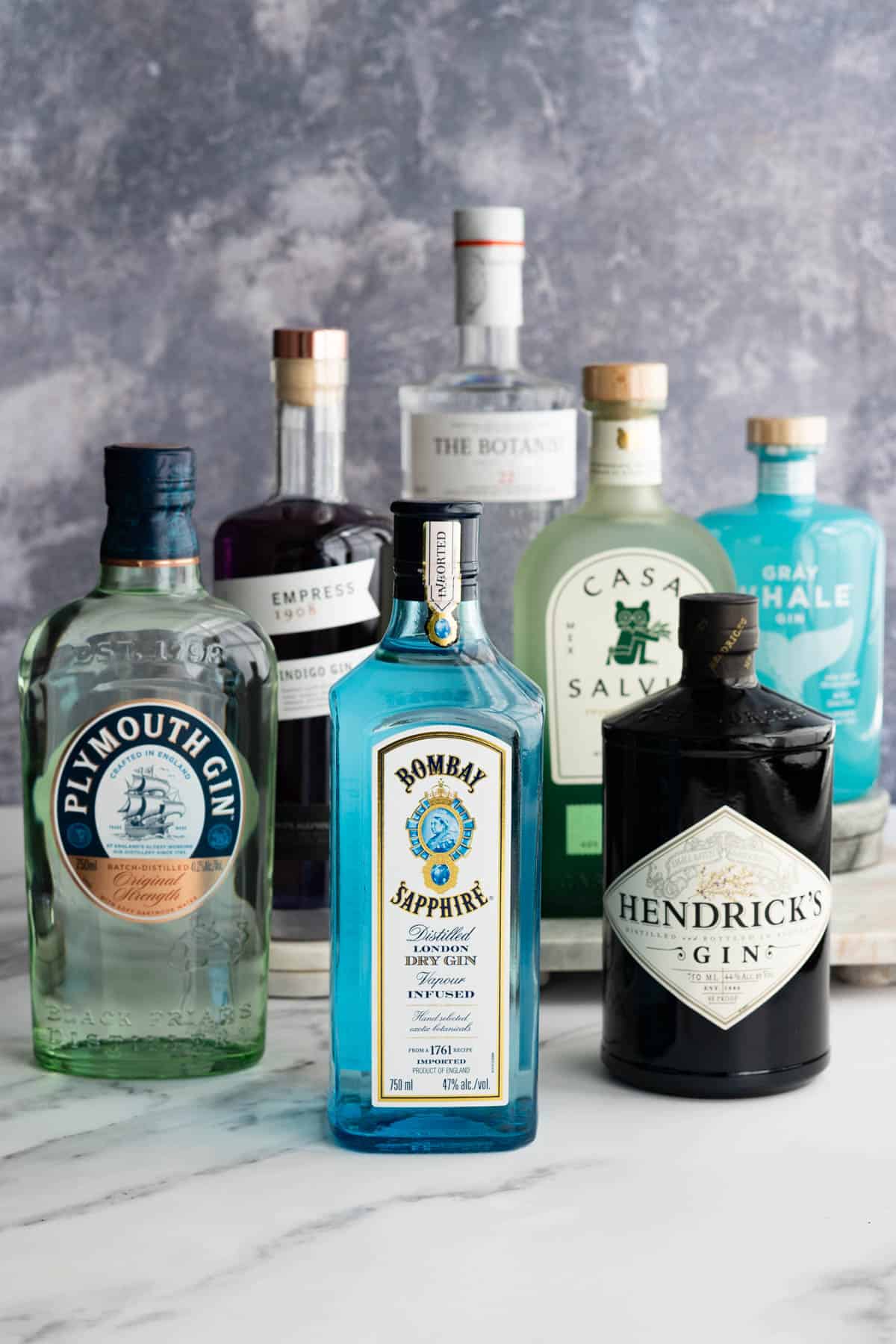
Gin is a category most Australians buy from without ever looking at the style word on the label. London dry, old tom, navy strength, sloe, pink, a dozen Australian bottles that use none of those terms. Some of those words are legal definitions with numbers behind them. Some are conventions. One of them is not gin at all.
This guide explains what each style word actually means, which ones are enforceable, and which bottle to start with depending on the drink you are making.
What gin is
Gin is a spirit flavoured with juniper. That is the short version and it is close to the legal one.
Regulation (EU) 2019/787, Annex I, category 20 defines gin as a juniper flavoured spirit drink produced by flavouring ethyl alcohol of agricultural origin with juniper berries of the species Juniperus communis, at a minimum of 37.5 per cent alcohol by volume, and it requires that the taste is predominantly juniper. In Australia, Standard 2.7.5 of the Food Standards Code names gin as a spirit and sets the floor for anything sold as a spirit at 37 per cent alcohol by volume, other than tequila.
Two useful consequences. The first is that there is a floor, and there are two of them: 37.5 per cent under the European definition of gin and 37 per cent under the Australian rule for anything sold as a spirit. Strength is not purely a house decision. The second is that juniper is the only mandatory botanical. Everything else on the label, the finger lime, the pepperberry, the cucumber, is the distiller's choice.
Distilled gin and London gin, which are not the same thing
The regulation splits gin into three tiers, and the difference is about method rather than flavour.
Gin under category 20 can be made by adding flavourings to neutral alcohol. No distillation with botanicals is required.
Distilled gin under category 21 must be produced by distilling agricultural alcohol of at least 96 per cent strength in the presence of juniper berries and other natural botanicals, with juniper predominant. The regulation says in terms that gin produced simply by adding essences or flavourings to alcohol is not distilled gin.
London gin under category 22 is distilled gin with a further set of conditions: all the flavour must come from distilling the alcohol in the presence of the plant materials, the resulting distillate must be at least 70 per cent alcohol, it must not be coloured, it must not be sweetened above 0.1 grams per litre, and it must contain nothing beyond those ingredients and water.
Two things follow. London gin is a method, not a place, so a London dry made in Sweden or Byron Bay is a legitimate use of the term. And "dry" is a defined word: under category 20 it may only be added where sweetening does not exceed 0.1 grams per litre. Hayman's London Dry Gin at 41.2 per cent is the reference point, described by its producer as showing notes of juniper, subtle exotic spice and a lively citrus finish. Herno Dry Gin at 40.5 per cent is the Swedish one, described by its distillery as an organic London dry, and it is the cleanest way to taste what the category is supposed to be. Bordiga Occitan London Dry Gin is the Italian one made inside the same rules.
Old tom
Old tom is the sweetened one. It has no separate legal definition in the regulation, which is exactly why it matters: the moment a gin is sweetened past 0.1 grams per litre it forfeits the word "dry", and old tom is the name the trade gives to what sits on the other side of that line. It is fuller and rounder than a London dry without being a liqueur, and it is what a martinez is usually made with.
Hayman's Old Tom Gin at 41.4 per cent is the one most bartenders reach for. Herno Old Tom Gin at 43 per cent uses the same botanicals as the distillery's dry gin with a larger amount of meadowsweet, which makes the two an unusually direct comparison of what sweetening does.
Navy strength
Navy strength is a convention, not a rule. No regulation defines it. What it means in practice is a gin bottled at around 57 per cent, which is roughly where spirits sat "at proof" on the old British scale defined in section 2 of the United Kingdom's Alcoholic Liquor Duties Act 1979 as enacted.
The practical point is not the history. It is that a gin at 57 per cent carries far more aroma and stands up in a drink that a 40 per cent gin disappears into. A gimlet or a negroni made with a navy strength gin is a different drink, not the same drink with more alcohol in it. It also means the pour should be smaller for the same drink, not the same.
Herno Navy Strength Gin at 57 per cent is the same distilled gin as the house dry gin with less water added, which is the clearest illustration of the idea on the shelf. Poor Toms Fool's Cut Gin at 52 per cent is the Sydney version, a little below the traditional mark but built for the same job.
Sloe gin, which is not a gin
Sloe gin is a liqueur. That is not a technicality. Category 35 of the same regulation defines sloe gin as a liqueur produced by macerating sloes in gin, with the possible addition of sloe juice, at a minimum of 25 per cent. It sits in the liqueur family, and our guide to the types of liqueur explains where that family begins and ends.
Hayman's Sloe Gin at 26 per cent is the English benchmark. Herno Sloe Gin at 30 per cent is that distillery's dry gin infused with organic sloe berries. Canberra Distillery Sloe Gin is the local one.
Australia has a variation worth knowing. Brookie's Slow Gin is made by Cape Byron Distillery in the traditional style of English sloe gin but with Davidson plum, a rainforest fruit native to the subtropical country behind Byron Bay, steeped in the distillery's own dry gin. Because it contains no sloes it is not a sloe gin in the European sense, and the deliberate spelling on the label says so.
Pink gin
Pink gin means two different things, and the label rarely tells you which. The older meaning is a drink: gin with a dash or two of aromatic bitters stirred through it. On a bottle today it usually means a bottled gin coloured and flavoured with red fruit. There is no legal definition of either, so the only reliable guide is the ingredient list and the strength.
Where the fruit is added after distillation and sugar comes with it, the result can fall outside the dry definition even when it is still legally gin. Antipodes Pink Gin is the Australian one, and its producer describes it as certified organic. Spring Bay Tasmanian Pink Gin at 40 per cent is made by infusing fresh Tasmanian raspberries from the Derwent Valley into the distillery's classic gin, which is about as literal as the style gets.
Australian gin
There is no Australian gin category. Nothing in the Food Standards Code defines one. What Australian gin describes is a habit: distillers here build on the London dry structure and then use native botanicals in place of, or alongside, the Mediterranean ones.
Brookie's Dry Gin at 43 per cent is the clearest example, distilled with 25 botanicals of which the distillery says 17 are native to its own rainforest. Never Never Triple Juniper Gin goes the other way and puts the emphasis back on juniper, as its name says. Poor Toms Sydney Dry Gin and Ambrosia Gin are two more worth knowing.
The strangest one is Hartshorn Sheep Whey Gin from Tasmania, where the base spirit is distilled from sheep whey rather than from grain. The distillery describes itself as the first in the world to release small batch spirits made from sheep whey. It changes the texture rather than the flavour, and it is noticeable in a gin and tonic.
For a way into several at once, the Four Pillars Gin Gift Pack puts three of the distillery's gins in one box, the Rare Dry, the Bloody Shiraz and the Olive Leaf, which is the least painful way to work out which style you actually like.
How to choose by drink
The style word is most useful when you work backwards from what you are making. A gin and tonic will take almost anything, but a juniper forward London dry keeps the drink dry and a pink or fruit gin will sweeten it. A martini wants a dry gin and rewards a higher strength. A negroni needs a gin with enough weight to be heard over the bitter and the vermouth, which is where a navy strength earns its place. A martinez wants an old tom. Sloe gin is a sipper over ice or a long drink with soda, and it does not belong in a martini.
Where to start
- Never bought gin before: Hayman's London Dry Gin at 41.2 per cent.
- One bottle for gin and tonic: Brookie's Dry Gin at 43 per cent.
- For martinis: Herno Dry Gin at 40.5 per cent.
- For negronis and anything with a lot going on: Herno Navy Strength Gin at 57 per cent.
- For a martinez or an old fashioned style build: Hayman's Old Tom Gin at 41.4 per cent.
- Something to sip over ice: Hayman's Sloe Gin at 26 per cent.
- Something genuinely unusual: Hartshorn Sheep Whey Gin.
- As a gift: Four Pillars Gin Gift Pack.
If you want the classic gin and Dubonnet build, our cocktail guide covers it. The full range sits on our Gin page and the local bottles on our Australian Spirits page, and we deliver to every Australian state and the ACT.