

Spiced rum, coconut rum, coffee rum and rum cream all sit on the same shelf, and the labels make them look like one family. They are not. Some are rum with spice added, some are rum with fruit, coffee or cream in them, and many are bottled below the strength Australian food law sets for anything sold as a spirit. Our Spiced Rum range holds the spiced bottles, and the Shipwreck coconut, vanilla, coffee, mango and cream bottles are on our Shipwreck Rum page.
This guide explains each style, what the law says, how to read the label, and which bottle to start with.
Quick picks
- A spiced rum from a Barbados rum distillery: Foursquare Spiced Rum, at 37.5 per cent. The label reads "Barbados rum with Spice & other Natural Flavours". For anyone starting out with spiced rum.
- A flavoured bottle for long summer drinks: Shipwreck Coconut Rum, from St Kitts, at 36 per cent, which the label describes as "Rum with natural coconut flavors". For people who mix with soda and ice.
- An Australian spiced rum: Canberra Distillery Spiced Rum, 37 per cent in a 500ml bottle. For buying local.
Spiced, flavoured and cream: three different things on the same shelf
Spiced rum is rum with spices added, often alongside vanilla, citrus or other natural flavours. The Food Standards Code sets no spice list and no minimum age for it. Age rules come from excise and customs law instead: rum made in Australia must be matured in wood for at least two years before it leaves the government's control, and imported rum is not released from customs control until customs is satisfied it has had the same two years in wood. Both Acts define rum as a spirit distilled from sugar cane products, and neither mentions spiced or flavoured products. Our types of rum guide shows where it sits among white, dark, navy and the rest.
Flavoured rum is built around one named flavour: coconut, vanilla, coffee, mango. The flavour is the point, and the rum is the carrier.
Rum cream is rum blended with dairy cream and flavourings. It is much lower in strength than either of the others.
The three are easy to confuse because producers use the word rum on all of them. The strength printed on the label is what tells them apart.
What Australian law actually says
The rules are in the Food Standards Code, and they are short. The definitions sit in Standard 1.1.2 and are repeated in Standard 2.7.5, the spirits standard. The Code defines a spirit as a potable distillate, and names rum as one example, with a list of things that may be added during production: water, sugars, honey and spices. Spice is on that list. Fruit, coffee, coconut and cream are not.
The Code defines a liqueur separately, as "an alcoholic beverage that is a spirit, flavoured by or mixed with other foods, which contains more than 15% alcohol by volume". Standard 2.7.5 then sets a separate sale rule: a food sold as a spirit must contain no less than 37 per cent alcohol by volume, with tequila the one exception at 35.
Three things follow from that:
- A rum with nothing added but water, sugars, honey or spices fits the Code's definition of a spirit, and at 37 per cent or more it can be sold as one.
- Apart from tequila, a product under 37 per cent cannot be sold as a spirit in Australia. Standard 2.7.5 does not create a separate category for flavoured products below that line, and it does not define rum on its own.
- A spirit flavoured by or mixed with other foods is what the Code calls a liqueur, provided it is above 15 per cent. At 15 per cent or below, that definition does not apply.
The Shipwreck range is a good example of why the label matters. On its own site Shipwreck names these bottles Spiced Rum, Vanilla Rum, Coconut Rum, Coffee Rum and Mango Rum and lists each at 36 per cent, and it lists its Coconut Rum Cream at 15 per cent. Those are all below 37 per cent, so wherever this guide uses the word rum for them, it is the producer's word, and we give you the strength alongside it.
Standard 2.7.1 requires the label to state the alcohol content and the approximate number of standard drinks, a standard drink being 10 grams of alcohol. That is the most useful line on any bottle in this category, and the standard drinks figure lets you compare a 36 per cent bottle with a 40 per cent one directly.
Spiced rum: what goes into each bottle
Producers rarely publish a sugar figure, and none of the bottles below does on the pages we checked, so this guide does not rank them by sweetness. What producers do publish is what went in and how they describe the taste, and that is what follows.
Barbados. Foursquare Spiced Rum is 37.5 per cent. The label reads "Barbados rum with Spice & other Natural Flavours" and "Blended & produced by R. L. Seale & Co. Ltd. Foursquare Rum Distillery, St. Philip, Barbados". The distillery's wider range is on our Foursquare Rum page.
Aged, with vanilla and orange. Shipwreck Spiced Rum is what the St Kitts producer names its spiced bottle. Shipwreck describes it as molasses based, "4 Year Aged in once charred American oak" and blended with natural vanilla, orange and island spices. It is 36 per cent, which puts it under the 37 per cent line for sale as a spirit.
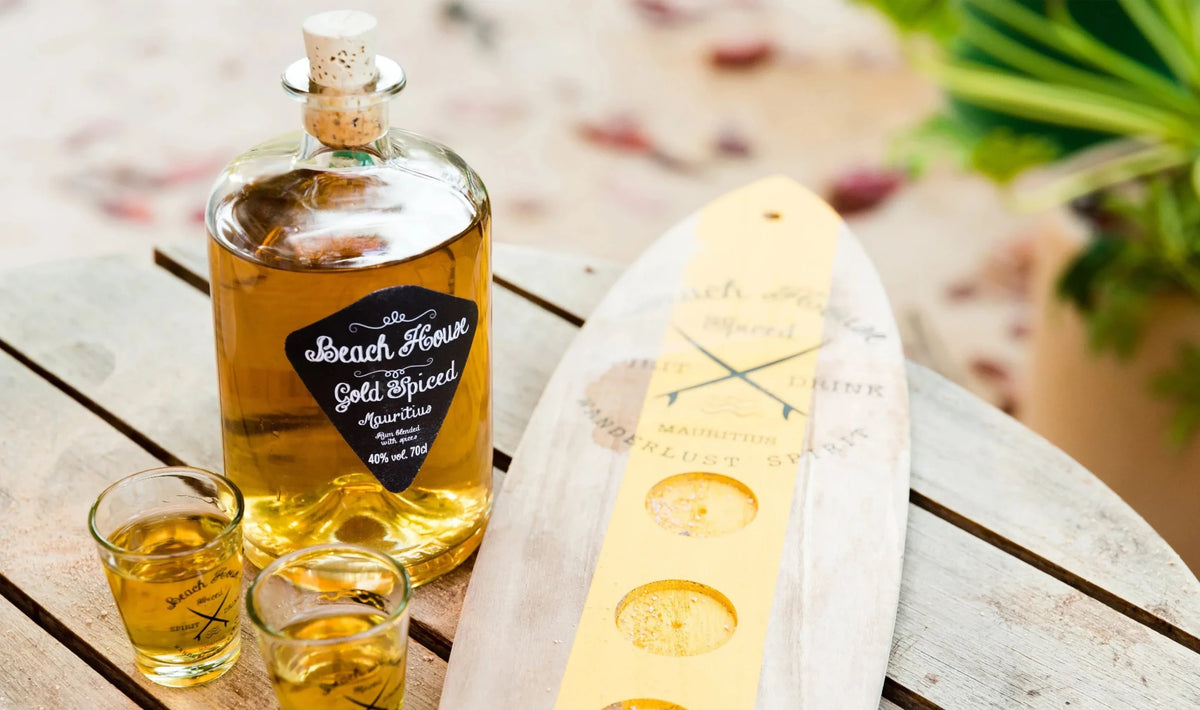
Citrus and ginger. Beach House Gold Spiced Rum comes from Mauritius, and the producer credits its flavour to natural lime, mandarin and ginger, with blood orange, candied ginger, honey, gingerbread and cinnamon on the nose.
Clear and tropical. Beach House White Spiced Rum is a translucent white rum infused with lychee, grapefruit, lime and passionfruit, and the producer notes candied ginger and a lift of chilli on the palate. Its sibling, Beach House Pink Spiced Rum, is infused with hibiscus, blackcurrant and grapefruit, balanced with coconut.
Panama rum, spiced in France. Naud Hidden Loot Spiced Rum at 40 per cent is rum from Panama, aged in bourbon casks, then taken to the Naud family distillery on the banks of the Seugne in France, where it takes on its spice and natural aromas. The producer's own tasting note calls the palate "soft, sweet and fruity", with vanilla, banana and coconut on the nose.
Australian. Yes, there is Australian spiced rum. Canberra Distillery Spiced Rum comes from The Canberra Distillery in Mitchell, ACT, at 37 per cent in 500ml. The distillery describes pineapple and citrus up front, then nutmeg and vanilla, finishing on chocolate and caramel.
Flavoured rum: coconut, vanilla, coffee and mango
The Shipwreck range from St Kitts covers most of the flavoured shelf in one family. Every bottle below is named a rum by the producer, listed at 36 per cent and described as molasses based and blended with a natural flavour. Shipwreck's coffee page calls that bottle a "coffee flavored rum", and the coconut label reads "Rum with natural coconut flavors".
- Coconut: Shipwreck Coconut Rum, blended with natural island coconut. The producer suggests tropical cocktails or sipping it chilled.
- Vanilla: Shipwreck Vanilla Rum, blended with natural Madagascar vanilla.
- Coffee: Shipwreck Coffee Rum, blended with natural Brazilian coffee, with butterscotch, toasted marshmallow and toffee in the producer's note.
- Mango: Shipwreck Mango Rum, blended with natural Brazilian mango, with citrus and peach behind it.
For a vanilla bottle built a different way, Arcane Arrangé Vanilles des Îles comes from Mauritius, and the producer calls it an arrangé rather than a rum. An arrangé follows the island tradition of steeping fruit and spice in rum, and Arcane says this one is enriched with Bourbon vanilla. The label reads "with Mauritius rum" and "enjoy frosted", and Arcane recommends serving it well chilled. Check the strength on the bottle you receive.
Rum creams
Shipwreck Coconut Rum Cream is the Shipwreck family's take. Shipwreck calls it a rum cream, describes it as Caribbean rum with real dairy cream and natural coconut flavour, and lists it at 15 per cent. The label calls it the family's version of a classic coquito. The producer's note runs from rich cream to fresh and toasted coconut, finishing with sweet rum, nutmeg and cardamom. It contains dairy.
Foursquare Crisma is 17 per cent. The label reads "Barbados Rum Cream Liqueur", "A blend of aged Barbados rum with cream, vanilla and coffee" and "Distilled and matured at Foursquare Rum Distillery". It sits above the Code's 15 per cent liqueur line, where the Shipwreck sits on it.
Neither producer page we could read gives storage advice once open, so follow the back label. For the wider family, our guide to types of liqueur covers cream liqueurs alongside the rest, and the full range is on our Liqueurs page.
How to serve them
The producers' own serves are simple.
Highball. Shipwreck's Stormy and Shipwreck is Spiced Rum over ice with fresh lime, a dash of orange bitters and ginger beer to top. The same idea works with Vanilla Rum, which Shipwreck pairs with ginger beer, lime and bitters. Canberra Distillery suggests its spiced rum over ice or with ginger ale or ginger beer.
Coconut and soda. Shipwreck's Club Coconut is Coconut Rum, soda water and a little fresh lemon juice over ice.
Coffee. Shipwreck builds an espresso martini on Coffee Rum, a coffee liqueur and espresso. If you need the liqueur, our Coffee Liqueur range has it. Shipwreck also pours its Coconut Rum Cream over cold brew and coffee liqueur on ice.
Fruit. Naud's Tropical Loot mixes Hidden Loot with orange juice, grapefruit juice and a little sugar syrup over ice. Shipwreck's Mango Spritz lengthens Mango Rum with prosecco and soda.
Chilled and neat. Arcane recommends its vanilla arrangé well chilled.
Pour with a jigger rather than by eye, and check the standard drinks figure on the label, because strength across this shelf runs from 15 to 40 per cent.
Which to buy
- If you want a spiced rum from a Barbados rum distillery, start with Foursquare Spiced.
- If you like citrus and ginger, try Beach House Gold.
- If you drink rum with ginger beer and lime, Shipwreck Spiced is the bottle behind the producer's own version.
- If a producer's description of "soft, sweet and fruity" appeals, look at Naud Hidden Loot.
- If you make espresso martinis, Shipwreck Coffee.
- If you want a dessert glass, one of the two rum creams.
If you would rather explore unflavoured rum, our guides to navy rum and Demerara rum go deeper, our best rum to buy in Australia guide covers the wider shelf, and the Christmas spirits gift guide has more ideas if the bottle is for someone else.
Where to start
- First spiced rum: Foursquare Spiced Rum.
- Citrus and ginger: Beach House Gold Spiced Rum.
- Australian: Canberra Distillery Spiced Rum.
- Coconut: Shipwreck Coconut Rum.
- Coffee: Shipwreck Coffee Rum.
- Rum cream: Foursquare Crisma or Shipwreck Coconut Rum Cream.
The full range sits on our Spiced Rum and Shipwreck Rum pages, with everything else on our Rums page, and we deliver to every Australian state and the ACT.