
Type "bitters" into a search box and you get two shelves that have almost nothing to do with each other. One holds small dropper bottles you use by the dash and never drink on their own. The other holds full size bottles of red, green and brown liqueur that you pour into a glass. Both are called bitters, and both are in our collection.
First, the sorting. Cocktail bitters are concentrated flavourings: herbs, roots, peels and spices steeped in a base, bottled small, and added to a drink a few drops at a time. Bitter liqueurs, which in Italy means the bitter and amaro families, are drinks in their own right, poured by the 30 ml measure and served over ice, with soda, or after dinner. For an Old Fashioned you want the first kind. For a negroni, a spritz or a digestivo you want the second.
Cocktail bitters: what they are
A cocktail bitters is a seasoning. The producer takes bittering roots and barks, gentian and cinchona most often, adds whatever gives the bottle its name, and steeps the lot until it is intensely concentrated. The bottle is small because you use it a few drops at a time.
The dose really is tiny. Fee Brothers prints "use 1-3 dashes (0.3mL)" on its product pages, and Sazerac lists the serving size of Peychaud's as "1 dash". Peychaud's Bitters is 35 per cent by Sazerac's own figures and Regan's Orange Bitters is 45 per cent, but the dose is dashes, not measures, and the alcohol is there to extract and hold the flavour, not to be drunk.
Not every bitters is spirit based. Fee Brothers says its bitters "are crafted with vegetable glycerin instead of spirits", though the flavouring ingredients carry alcohol essence the way vanilla extract does.
Aromatic bitters are the spiced, all purpose family, Angostura being the household name. Peychaud's Bitters at 35 per cent is the New Orleans version, made to a recipe Sazerac traces to Antoine Amédée Peychaud, who was making it in his French Quarter apothecary by 1832. Sazerac calls it an essential ingredient in the official Sazerac cocktail, and that is the drink to buy it for.
Orange bitters are the second bottle any bar needs. Regan's Orange Bitters at 45 per cent lists orange peel, cardamom, caraway and coriander, and it is the one for a martini, a Martinez or a rye Old Fashioned. Fee Brothers Orange Bitters is the glycerine based alternative, flavoured, in the producer's words, "principally from the skins of oranges grown in the West Indies".
Flavoured bitters are where the range gets interesting, and Fee Brothers makes the widest set. We carry Aztec Chocolate, pitched on the Aztec drink of cacao beans, peppers and spices; Peach, with a bitter almond background; Rhubarb, built on flavours available in 1800s America; Plum, which Fee's likens to British plum pudding; and Cherry.
Bitter liqueurs: the Italian bitter rosso
Now the other shelf. In Italy a "bitter" is a red, or occasionally green, liqueur built on bitter roots and citrus, with enough sugar to balance, bottled well below spirit strength and served before a meal. Campari is the reference point everyone knows. The two great before dinner drinks are built on a bitter of this kind: the negroni, equal parts bitter, sweet vermouth and gin, and the americano, which swaps the gin for soda.
Bordiga Bitter Rosso at 21 per cent is our Piedmontese version, from the Bordiga distillery in Cuneo. Bordiga describes it as "bitterness mitigated by the sweetness of citrus fruits" and its own serve is an americano: 30 ml bitter, 30 ml red vermouth, 30 ml soda, over ice with orange peel. Bordiga Bitter Verde at 20 per cent is the same idea in green, with what the producer calls "marked herbaceous tones" from mountain herb infusions, and Bordiga pairs it with white vermouth and soda rather than red.
Luxardo Aperitivo is the gentle end of the family. Luxardo, in Torreglia near Padua, describes it as an infusion of herbs, roots and citrus, and the serve is the obvious one: prosecco and soda, as a spritz. Our bottle is 11 per cent.
France makes a version too: Dolin Bitter de Chambéry at 16 per cent, bitter orange, gentian and cinchona macerated in wine, for the same two drinks.
Amaro: the after dinner family
Amaro is the Italian word for bitter used as a noun, and where one word stops and the other starts is house custom. Neither word ties a bottle to a place the way a protected origin name does, and each producer decides which word goes on its label. In practice: a bitter rosso is bright, red, citrus led and drunk before a meal, usually lengthened with soda or vermouth. An amaro is darker, more herbal and root driven, often higher in strength, and drunk after a meal, neat or over ice, as a digestivo. Some bottles sit exactly on the line.
Bordiga Amaro St. Hubertus at 38 per cent is the serious end. Bordiga calls it "intense but harmonious", built from infusions and distillates of spices, herbs and flowers "coming mostly from the Maritime Alps", and recommends serving it chilled, between 6 and 10 degrees.
Bordiga Amaro Chiot Montamaro at 18 per cent sits on that line. Bordiga files it with its amari and describes it as little alcohol and a great deal of flavour, from infusions and distillates of alpine flowers and herbs, and at that strength it drinks as easily before a meal with soda as after one.
Fernet, in its own corner
Fernet sits at the sharp end of the amaro family, and Fernet-Branca is the bottle that defines it. Fratelli Branca has made it in Milan since 1845. Branca's own description is 27 herbs, roots and spices, among them gentian, rhubarb and galangal, infused in alcohol and aged for a year in oak, to a formula the company says is still secret. Fernet-Branca is 39 per cent, and Branca describes the taste as bitter, bold, minty fresh and herbally intense. It is not a beginner's amaro.
Branca's own serves: neat or on ice, in the Hanky Panky cocktail, or lengthened with cola, chinotto or ginger ale.
The Australian makers
All of this is now made here, and the local bottles reach for native botanicals where an Italian house reaches for alpine ones.
Maidenii Roselle Bitter at 22 per cent comes from the vermouth house founded by Shaun Byrne and Gilles Lapalus. It is built on a rosé from Heathcote grapes, coloured and flavoured with roselle, the hibiscus calyx, and Maidenii names strawberry gum, Tasmanian pepperberry and saltbush among its 24 botanicals, with the bitterness from roots, chiefly gentian.
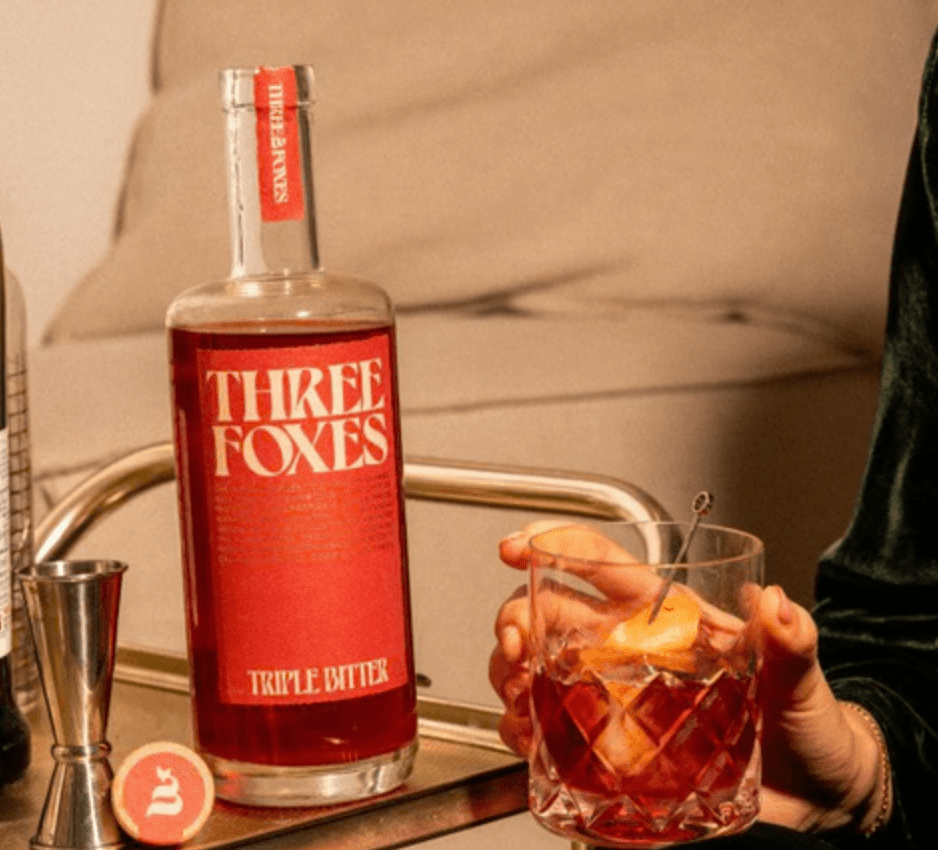
Three Foxes Triple Bitter at 27 per cent is made in Heidelberg West, Victoria, from citrus, rhubarb, cranberries and native spices over bittering herbs. Three Foxes serves it in a negroni or long with lemon squash soda. Three Foxes Organic Espresso Amaro at 23 per cent is the after dinner bottle from the same house, espresso and dark chocolate over earthy botanicals, "subtly sweet with a smooth bitter finish".
Poor Toms Imbroglio Amaro at 25 per cent is from the Marrickville distillery in Sydney. Poor Toms lists 25 herbs and fruits, hibiscus, Seville orange, rhubarb, wormwood, strawberry gum and gentian among them, and calls it "a bitter/sweet Amaro Australiano right at home in a negroni, a spritz, or straight over ice".
Pot & Still Fig Amaro at 26 per cent comes from the Glen Ewin Estate fig orchard at Houghton in the Adelaide Hills, South Australia. The producer's note is fig leaves and white pepper on the nose, fig confit on the palate and a bitter citrus and gentian finish, served over ice with orange or in a negroni.
White Possum Scarletta at 26 per cent, from Altona North in Victoria, is the most direct local answer to a bitter rosso. White Possum infuses and distils orange and lemon peel with lemon myrtle grown at the distillery, adds gentian root, and leaves it unfiltered, so a little sediment is normal. Negroni, spritz, or over ice with a lemon twist.
How to use them
Cocktail bitters: one to three dashes into the glass with the other ingredients. An Old Fashioned takes aromatic bitters, a martini takes orange, a Sazerac takes Peychaud's.
Bitter rosso and its relatives: 30 ml is the measure. Equal parts with sweet vermouth and gin for a negroni, with soda in place of the gin for an americano, or with prosecco and a splash of soda for a spritz. The wine based ones, Maidenii and Dolin, are best kept in the fridge once open.
Amaro and fernet: 30 ml neat or over ice after a meal. The lower strength ones, Chiot Montamaro and the Australian amari, also take soda as a long drink.
Where to start
- First two dash bottles for the bar: Peychaud's Bitters and Regan's Orange Bitters.
- Keeping the alcohol low: Fee Brothers Orange Bitters.
- A red bitter for negronis: Bordiga Bitter Rosso.
- A spritz base: Luxardo Aperitivo.
- A first amaro: Bordiga Chiot Montamaro.
- A serious after dinner amaro: Bordiga Amaro St. Hubertus.
- Fernet: Fernet-Branca.
- Australian, before dinner: Maidenii Roselle Bitter or White Possum Scarletta.
- Australian, after dinner: Pot & Still Fig Amaro or Three Foxes Organic Espresso Amaro.
The dash bottles and the bitter liqueurs sit together on our Bitters page, the after dinner bottles on our Amaro page, and we deliver to every Australian state.