
Vermouth is a wine flavoured with botanicals and usually fortified with a little extra alcohol, and wormwood (Artemisia) is the herb that defines it. It comes in sweet red, dry white and sweeter white (blanc or bianco) styles. Below we explain how each style tastes and which bottle suits which drink.
What is vermouth?
The clearest definition comes from European law, which covers most of the vermouth on our shelves. EU Regulation 251/2014 classes vermouth as an aromatised wine. That means at least 75 per cent of the drink must be wine or other grape products, and its actual strength must sit between 14.5 and 22 per cent alcohol. Within that category, vermouth is the version whose characteristic taste comes from Artemisia species. Most vermouths are also fortified with added alcohol, although since an amendment in December 2021 the EU definition no longer requires it. Without wormwood, it is not vermouth.
The name points to that herb. Antonio Benedetto Carpano made his aromatised wine in Turin in 1786, and the drink took its name from Wermut, the German word for wormwood. Turin, and the Alpine town of Chambéry just over the mountains in Savoie, remain its two historic homes.
How vermouth is made
Every producer has its own recipe, but the method follows the same broad steps:
- Choose a base wine. This is usually a fairly neutral white. Dolin uses Ugni Blanc for all its vermouths. Australian makers often go further: Maidenii builds its Dry on Viognier and its Sweet on Cabernet Sauvignon.
- Extract the botanicals. Herbs, roots, barks, flowers and spices are steeped (macerated) in alcohol or wine to draw out their flavour. Wormwood is always among them.
- Blend, fortify and sweeten. The extracts go into the wine, usually with extra alcohol and, in most styles, sugar. Some red vermouths get their colour from caramel, the only colouring Vermouth di Torino is allowed.
- Rest and bottle. Some vermouths are bottled young. Others rest in steel or oak first.
Because the base is wine, vermouth behaves more like wine than spirit once you open it. More on that below.
Sweet vs dry vermouth, and the other styles

EU law sets the sugar levels for the terms on the label. Extra dry means under 30 grams of sugar per litre, dry under 50 grams, and sweet 130 grams or more. Here is how the main styles line up.
Rosso, red or sweet vermouth
This is the dark, spiced, bittersweet style used in the Negroni and the Manhattan. Vermouth di Torino is traditionally sweeter than its French counterparts.
Dry or extra dry vermouth
Pale, crisp and herbal, with little sugar. This is the Martini vermouth.
Blanc or bianco vermouth
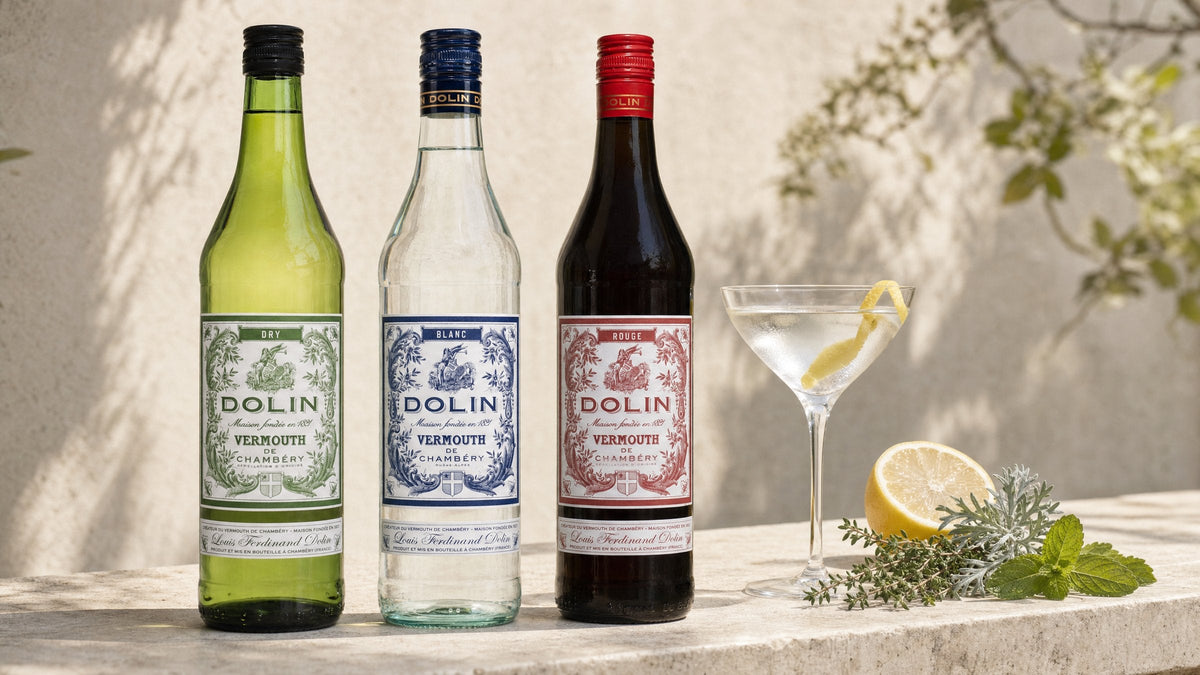
The name says white, but don't confuse it with dry. Blanc is clear or pale gold and usually sweeter. Dolin's has notes of elderflower, fresh almond and peach. Dolin describes its Blanc as "more complex and sweeter" than its Dry. According to Dolin, the first white vermouth was made in Savoie in 1881.
Rosé or rosato vermouth
Italian producers also make rosato (rosé) and ambrato (amber) vermouths, which are paler relatives of rosso. They are less common in Australia, so the classic three styles in our vermouth range are the place to start.
Vermouth di Torino
Vermouth di Torino is a protected geographical indication. Italy recognised it by decree on 22 March 2017, and in 2020 the EU entered it in its register. Under the rules, it must be made in Piedmont from Italian wine and flavoured with Artemisia grown or gathered in Piedmont. Its strength must be between 16 and 22 per cent. To be labelled Superiore, a vermouth needs at least 17 per cent alcohol, a base of at least 50 per cent Piedmontese wine, and other herbs from Piedmont besides the Artemisia. Bordiga Vermouth di Torino Rosso is a good place to start. Its secret is Piedmont's Nebbiolo grape, blended with white wines.
Chambéry vermouth and the Dolin story
Chambéry is the home of French Alpine vermouth, and Dolin is one of its historic houses. According to Dolin, Joseph Chavasse was a liqueur maker in the village of Les Echelles. In 1821, after seeing the new drinks Turin's liqueur makers were producing, he set out to create his own vermouth recipe. He moved to Chambéry in 1830. After his death, his daughter Marie married Louis-Ferdinand Dolin, who bought the distillery in 1852 and named it Vermouth Dolin. In 1876, Marie Dolin took her Vermouth de Chambéry to the World Fair in Philadelphia and won a gold medal. Only two families have run the company in its 200 years, and Dolin still makes everything in Chambéry.
You will see Chambéry's status described in different ways, so here is the short version. Vermouth de Chambéry was listed as a geographical designation under the EU's original 1991 rules for aromatised wines, and it was France's only one. Since the EU replaced those rules in 2014, sources have disagreed on where it stands, and some producers still describe it as an appellation. What is not in doubt is the reputation: for two centuries the name has stood for vermouth made in the town, in a lighter, more Alpine style than the Turin rossos. Routin, made in Chambéry since 1883, is another Chambéry house we stock.
How to drink vermouth: four classic serves
The word aperitif comes from the Latin aperire, to open. Traditionally, that meant a drink before the meal, and vermouth has long filled that role. These are the serves worth knowing. The cocktail measures follow the International Bartenders Association specs.
Negroni
- 30 ml gin
- 30 ml Campari
- 30 ml sweet red vermouth
Build over ice in a chilled rocks glass, stir gently and garnish with half an orange slice. Maidenii designed its Sweet for exactly this drink. If you want to swap the Campari for another bitter red, our guide to bitters and aperitivo liqueurs covers the options.

Dry Martini
- 60 ml gin
- 10 ml dry vermouth
Stir with ice, strain into a chilled cocktail glass and finish with lemon oil from a twist or an olive. If you like more vermouth in your Martini, Maidenii's own ratio is three parts gin to one part Maidenii Dry, finished with an orange twist. Our gin styles guide will help you pick the gin.
Manhattan
- 50 ml rye whiskey
- 20 ml sweet red vermouth
- 1 dash Angostura bitters
Stir with ice, strain into a chilled cocktail glass and garnish with a cocktail cherry. For a firmer, more bitter edge, try Punt e Mes. The name is Piedmontese for "one point and a half", meaning one point of sweetness to half a point of bitterness.
Vermouth and tonic
Our house ratio is 60 ml of dry or blanc vermouth, 90 ml of tonic water and plenty of ice in a wine glass, with a citrus wheel. Dolin suggests serving its Blanc neat over ice. The producers of Vermouth Forcalquier recommend it cool, over ice or with tonic.
Which vermouth to buy: where to start
Every bottle below is in our vermouth collection now.
From Chambéry
- Dolin Vermouth Dry: 15 botanicals at 17.5 per cent, and the one to buy if a Dry Martini is your drink.
- Dolin Vermouth Blanc: 32 plants and spices, including hibiscus, basil and Alpine gentian. It suits anyone who wants a vermouth to sip over ice.
- Dolin Vermouth Rouge: notes of fruit compote, prune and cinnamon over a gently bitter base. Dolin names the Negroni and the Manhattan as its classic uses.
- Routin Vermouth Blanc: made in Chambéry from Jacquère and Sauvignon Blanc wines with 18 plants, flowers and spices. Its sweet, thyme-scented style makes a good comparison with the Dolin.
From Australia
- Maidenii Dry Vermouth: a Viognier base with wormwood, strawberry gum and river mint at 19 per cent. Made for Martini drinkers who want a native Australian accent.
- Maidenii Sweet Vermouth: Cabernet Sauvignon with wattle seed, grapefruit zest and mace. Built for the Negroni, and also sold as a 375 ml bottle.
- Three Foxes Sunny Arvo Ruby Vermouth: a sweet vermouth from Melbourne's north with rosella, clove, wattleseed and burnt orange peel. It suits anyone who likes their rosso rich and fruity.
- Autonomy Soma Red Vermouth: Tinta Barroca grapes with wormwood, Davidson plum and Australian myrtles. Bittersweet and tart for drinkers who like a sharper edge.
From Italy
- Bordiga Vermouth di Torino Rosso: Nebbiolo-based Vermouth di Torino, for anyone who wants the protected Turin style.
- Distilleria Negroni Vermouth Rosso: made near Treviso from estate-grown wine with rhubarb root, quassia and vanilla. It is sweet, with a light tannic touch. Its sister bottle, the Vermouth Bianco, is dry and balsamic.
- Carpano Antica Formula: the flagship of the Turin house of Carpano, a dark, heavily spiced sweet vermouth with vanilla and dried fruit. Bold enough to lead a Manhattan.
How long does vermouth last once opened?
Treat an open bottle of vermouth the way you would a bottle of wine. Like any wine, it is sensitive to oxygen once opened, and the fresh botanical aromas are the first thing to go. How long it lasts depends on the bottle. Autonomy says Soma is best within two weeks of opening. Distilleries et Domaines de Provence says to keep Forcalquier somewhere cool and drink it within a few months.
Our practical advice:
- Screw the cap back on tightly and keep the bottle in the fridge once it is open. Routin's advice is the same: keep it chilled, because the cold slows the loss of aroma. Maidenii's co-founder Gilles Lapalus recommends pouring vermouth straight from the fridge.
- Write the opening date on the label.
- If you only use a splash for Martinis, buy a smaller bottle, such as the Maidenii Dry 375 ml.
- If a bottle tastes flat, use it for cooking instead of a cocktail.
Vermouth FAQ
Is vermouth a wine or a spirit?
It is a wine. Under EU rules, at least 75 per cent of vermouth must be wine or grape products, and its strength must sit between 14.5 and 22 per cent, usually reached by adding a little alcohol. That puts it alongside sherry and port more than gin or whisky.
What is the difference between vermouth blanc and dry vermouth?
Both are pale, but blanc (bianco) is usually sweeter and softer, while dry vermouth has less than 50 grams of sugar per litre and a crisper, more herbal finish. Use dry in a Martini. Blanc is better for sipping over ice or lengthening with tonic.
What is the best vermouth for a Negroni?
Any good sweet red vermouth will work. Maidenii Sweet was designed for it. Bordiga Rosso and Distilleria Negroni Rosso make a classically Italian Negroni, and Dolin Rouge makes a lighter, more herbal one.
What is the best vermouth for a Martini?
A dry or extra dry vermouth. Dolin ties its Dry to the Dry Martini and publishes a recipe for it. Maidenii Dry adds Australian native botanicals.
Can you drink vermouth on its own?
Yes. Dolin, Maidenii, Routin and Distilleries et Domaines de Provence all suggest drinking their vermouths chilled or over ice. Routin suggests adding a wedge of lemon.
Ready to find your bottle? Browse our full vermouth range. We deliver to every Australian state and the ACT.